
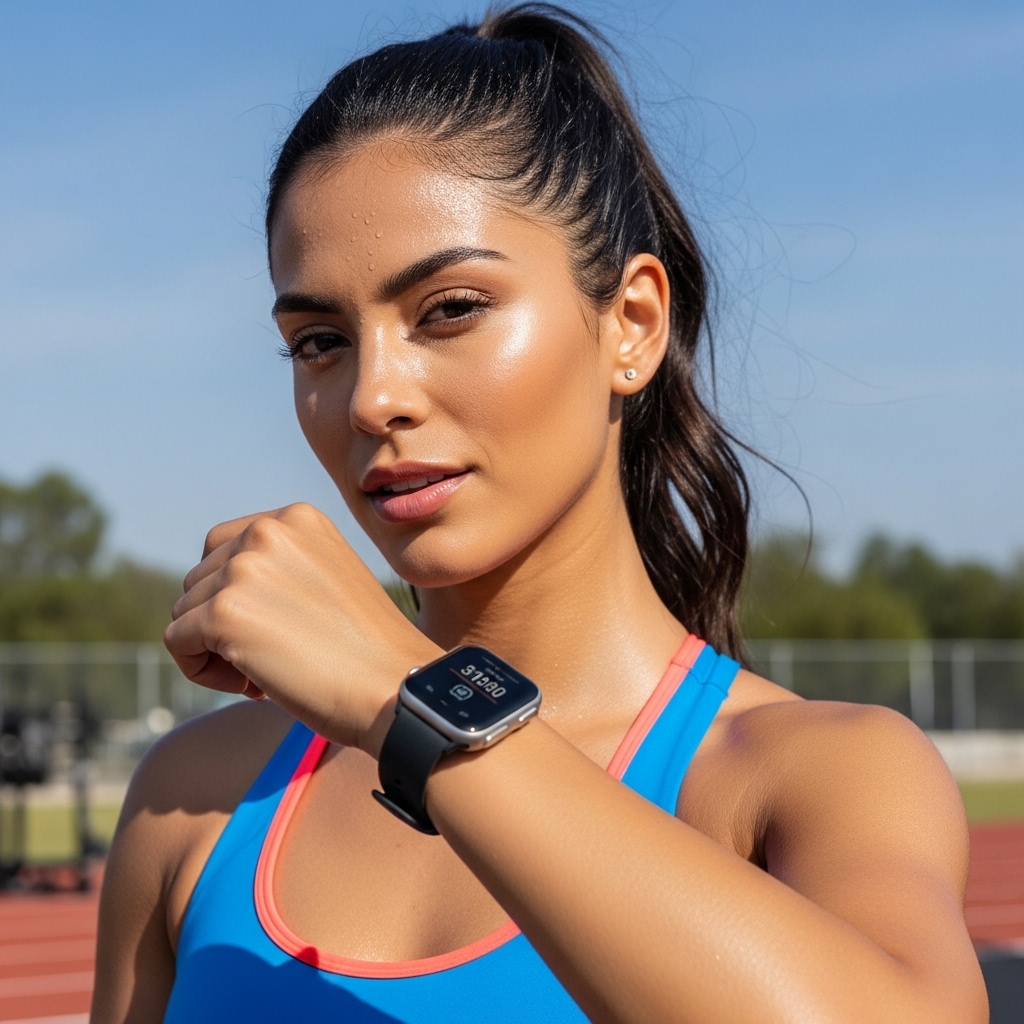

Smartwatch displays often demand constant attention with regular notification pings, bright screens, and daily recharging routines. Many active individuals now look at their daily habits to decide whether an interactive watch face or background sensor tracking suits their routine best. If you want a distraction-free health companion, looking at fitbit apple watch vs alternatives helps you weigh simple fitness tracking against full-featured wrist computers. Minimalist options like the Fitbit Google Air – Screenless Activity Tracker shift the focus entirely toward continuous health monitoring without any visual distractions. In contrast, professionals needing on-wrist scheduling often prefer a smart watch for productivity to handle messages and daily agendas directly.
Wrist comfort and charging routines strongly dictate long-term satisfaction. Screenless trackers sit light and quiet on the wrist, offering extended multi-day battery runtimes that make overnight sleep tracking effortless. Smartwatches offer richer app ecosystems and standalone communication, but they require frequent trips to the magnetic charger. Looking closely at documented sensor capabilities, wrist-fit dimensions, and battery figures ensures you match the wearable to your daily lifestyle.

Pros
- Screenless form factor eliminates display distractions and wrist glare during workouts, office hours, and sleep
- Impressive manufacturer-listed battery life of up to seven days between charges
- Fast charging delivers an estimated full day of tracking from a quick five-minute charge
- Micro-adjustable one-size band accommodates wrist circumferences from 130 mm to 210 mm
- Modular pebble core snaps easily into different compatible lifestyle and workout bands
Cons
- No built-in display requires users to check their paired smartphone app to view daily metrics and real-time stats
- Advanced Gemini-driven personalized coaching requires an ongoing Google Health Premium subscription after the 3-month trial
- Lacks on-wrist smartwatch capabilities such as notification reading, wrist calling, or independent app use
The Fitbit Google Air in Obsidian represents a dedicated approach to health tracking for buyers who want comprehensive biometric monitoring without the continuous interruptions of a standard smartwatch screen. Built around a lightweight pebble architecture, this wearable tracks daily movement, workouts, and sleep quietly in the background. It is especially suited for fitness-minded individuals, sleep-tracking enthusiasts, and minimalists who prefer traditional timepieces or simply want freedom from constant wrist notifications.
Comfort and physical fit are central to everyday wearable adherence, and the Google Air addresses this with a one-size tracker band engineered to fit wrist circumferences from 130 mm to 210 mm. The micro-adjustable strap ensures a snug, quiet fit against the skin, which is necessary for sensor stability during exercise and sleep. With its modular pebble format, swapping looks is straightforward: users can press the tracker pebble out and click it into alternative bracelets or workout bands to match different occasions in seconds.
Tracking capabilities are powered by advanced onboard sensors and updated algorithms designed for 24/7 health monitoring. By syncing with Google Health, the tracker collects continuous activity and rest data while delivering adaptive coaching. The device also includes an introductory 3-month trial to Google Health Premium, which unlocks Gemini-powered personalized coaching that adapts to personal routines, though prospective buyers should keep in mind that continuing this premium service requires a separate ongoing subscription.
Battery performance is a distinct strength of screen-free architecture. The manufacturer lists the Google Air battery runtime at up to one full week under standard usage conditions, significantly reducing charging cadence compared to conventional smartwatches. When a quick top-up is needed, supported fast charging provides roughly one full day of operating battery life from just a five-minute charge, making it easy to keep tracking with minimal downtime.
The primary trade-off of the Google Air is its intentional lack of an onboard screen. Anyone looking to view step counts, check heart rates mid-stride, or glance at incoming texts directly on their wrist will need to pull out their smartphone. For shoppers seeking an unobtrusive, durable, and long-lasting wellness wearable that operates quietly in the background, the Fitbit Google Air delivers an effective, distraction-free solution.
The Fitbit Google Air is built specifically around continuous 24/7 tracking, monitoring vital health and activity data throughout the workday, workouts, and overnight rest. Advanced sensors and modern algorithms work together to record movement and biometric trends automatically without requiring manual interaction.
Paired with the Google Health ecosystem, the tracker provides adaptive coaching to help users make practical adjustments to their daily routines. The included 3-month trial of Google Health Premium introduces personalized guidance powered by Gemini, though users should note that premium coaching requires a paid subscription once the initial trial period concludes.
Thanks to its screenless configuration, the Fitbit Google Air achieves a manufacturer-listed battery life of up to seven days on a full charge, eliminating the need for daily recharging cycles.
The device also features rapid charging capability. According to manufacturer specifications, connecting the tracker for just five minutes supplies enough power for approximately one full day of continuous activity and sleep tracking.
The Google Air comes in a versatile One Size configuration, engineered with a micro-adjustable strap that accommodates wrist sizes between 130 mm and 210 mm. The lightweight, low-profile build ensures the device rests comfortably against the skin during high-intensity training and overnight sleep tracking.
Its modular pebble format allows the core tracking module to be detached and transferred into different compatible bands, letting owners transition quickly between workout straps, casual bracelets, and sleep bands with a simple click-in mechanism.
Frequently Asked Questions
Does the Fitbit Google Air feature a visual display?
No, the device uses a completely screenless pebble design. It tracks activity, movement, and sleep silently without glowing lights or visual app alerts, syncing all recorded data directly to your paired smartphone app.
How does battery runtime compare between screenless trackers and full smartwatches?
Screenless trackers offer significantly longer battery life because they lack power-hungry displays. The Fitbit Google Air delivers up to a week of runtime on a single charge, whereas typical color smartwatches usually require daily charging.
What wrist sizes does the Fitbit Google Air tracker accommodate?
The included band supports wrist circumferences from 130 mm to 210 mm. This one-size, micro-adjustable band allows users to achieve a snug fit for accurate sensor contact during exercise and sleep.
Can screenless activity trackers measure advanced health metrics?
Yes, built-in sensor arrays track continuous heart data, daily activity, and sleep patterns accurately. Dedicated athletes who want real-time pacing numbers during runs may still prefer a watch for VO2 max measurement with an active display for instant performance feedback.
Is a subscription mandatory to use the Fitbit Google Air?
No, core activity tracking and standard app features function without an added fee. However, advanced personalized coaching and Gemini-powered insights require a Google Health Premium membership, which includes an initial trial period.




Write Your Review
No reviews yet. Be the first to share your experience!