


Murky water, thick neoprene gloves, and rapidly shifting depths quickly turn an inadequate timepiece into a major liability. Many divers struggle with cramped digital screens, confusing menu trees, and stiff rubber straps that pinch the wrist or slip during descent. Selecting the best scuba dive watches means prioritizing high-contrast legibility, dependable decompression algorithms, and rock-solid sealing against crushing ocean pressure. A reliable underwater companion eliminates guesswork so you can focus entirely on your surroundings and gas supply. Just as land explorers count on the best affordable Casio G Shock watches for brutal trail conditions, divers need purpose-built instruments engineered specifically for marine safety.
Careful analysis of manufacturer specifications and diver feedback shows a clear divide between streamlined wrist computers and traditional analog timekeepers. Dedicated electronic units like the Cressi Leonardo series and Suunto D5 offer critical decompression schedules, ascent alarms, and multi-gas tracking. Meanwhile, classic analog models like the Casio MDV106 provide instant elapsed-time reading via a unidirectional bezel and screw-down crown without relying on battery management between dives. Evaluating your dive profile, preferred gas mixes, and water temperatures ensures you secure the water resistance, case durability, and strap security necessary for worry-free bottom time.


Pros
- Excellent value for a true 200m dive watch with screw-down crown.
- Clean, legible dial with luminous markers for low-light visibility.
- Stainless steel case feels solid and resists corrosion.
- Date window adds everyday practicality.
- Lightweight resin band and compact 44mm case fit comfortably on most wrists.
Cons
- Resin strap may feel stiff at first and lacks quick-adjust or diver extension.
- Mineral crystal is less scratch-resistant than sapphire; careful handling recommended.
- No luminous pip on bezel, which some divers may miss for elapsed time tracking.
The Casio MDV106 Series is a classic analog dive watch designed to deliver reliable performance at an accessible price point. With a stainless steel case, black resin band, and a straightforward three-hand movement, this watch captures the essential dive watch aesthetic while keeping things simple and functional. It's a watch that appeals to watch enthusiasts looking for a no-fuss beater, travelers who need a durable companion, and everyday wear users who want a rugged yet affordable timepiece.
Best suited for watch collectors, outdoor enthusiasts, office workers, and gift buyers, the MDV106 excels in real-world scenarios where water resistance and durability matter. The 200-meter water resistance, screw-down crown, and screw-down caseback are features typically found on pricier dive watches, making this an excellent choice for swimming, snorkeling, or wearing in heavy rain. The luminous markers and hands ensure readability in low-light conditions, a practical benefit for evening commutes or camping trips.
Comfort is a strong point: the resin band is lightweight and flexible, and the 44mm case wears smaller thanks to its compact lug-to-lug distance. The mineral crystal offers solid scratch protection for daily wear, though users who frequently encounter hard surfaces might prefer upgrading to a sapphire crystal aftermarket. The anti-reverse bezel operates with positive clicks and adds a tool-like feel, but it lacks a luminous pip, which some divers might consider a minor limitation.
Build quality is impressive for the price. The stainless steel case is well-finished with a brushed top and polished sides, and the screw-down components inspire confidence in water resistance. The quartz movement is reliable and accurate, backed by a three-year battery life that reduces the need for frequent replacements. Setting the time and date is straightforward, and the watch requires minimal maintenance beyond occasional battery changes.
One realistic limitation is the resin strap: it can feel stiff out of the box and doesn't include a diver's extension or micro-adjust clasp. However, the 20mm lug width makes it easy to swap for a NATO, silicone, or leather strap to personalize fit and style. The absence of a day display or chronograph keeps the dial clean and focused, but users who prefer more complications may want to look elsewhere.
Overall, the Casio MDV106 is a practical buying choice for anyone seeking an affordable, capable dive watch that looks the part. Watch collectors will appreciate its value and modding potential, while travelers and outdoor users will love its water resistance and durability. It also makes a solid gift for someone starting a watch collection or needing a reliable everyday watch without breaking the bank.
The Casio MDV106 offers 200 meters (660 feet) of water resistance, which is certified for recreational scuba diving (if properly maintained). This is achieved through a screw-down crown and screw-down caseback, both sealed with gaskets. While the watch can handle swimming, snorkeling, and showering, it's recommended to rinse the watch with fresh water after saltwater exposure and avoid operating the crown underwater. The anti-reverse bezel aids in tracking elapsed time underwater, though it lacks a luminous marker for dark environments.
The MDV106 features a solid stainless steel case with a brushed finish on top and polished sides, giving it a refined look for its price point. The mineral crystal offers respectable scratch resistance for daily wear. The resin band is durable and lightweight, though some users may find it initially stiff; breaking it in or swapping for a softer strap can improve comfort. The clasp is a basic buckle style that feels secure. Overall, the watch feels robust and well-assembled, with tight tolerances on the bezel and crown.
This watch is ideal for everyday wear, especially for those who work in casual or active environments. It excels as a travel companion due to its water resistance and durability. Watch collectors often add it to their rotation as a reliable beater or modding platform. It also makes a thoughtful gift for a first-time dive watch owner or anyone who appreciates a classic tool watch aesthetic without a high price tag. Not recommended for formal occasions due to its sporty design, but it pairs well with jeans, shorts, or outdoor gear.


Pros
- Expansive, high-contrast 2.4-inch screen with customizable data fields
- Full technical gas support including nitrox and trimix
- Dedicated surface GPS for exact dive site marking and waypoint tracking
- Tactile metal buttons offer positive feedback under depth and with gloves
- Generous 30-hour dive battery life between charges
Cons
- Large dive-console footprint makes it unsuitable as an everyday office watch
- GPS tracking operates only on the surface, as satellite signals cannot penetrate water
- Advanced technical gas features may exceed the needs of casual vacation snorkelers
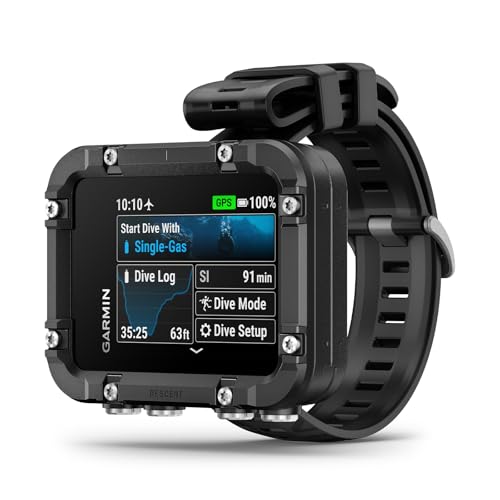
The Garmin Descent X30 is a purpose-built dive computer tailored specifically for scuba divers, technical explorers, and dive enthusiasts who demand uncompromising underwater clarity. Unlike standard hybrid smartwatches that squeeze dive functions onto a compact wrist face, this instrument utilizes a generous 2.4-inch color display designed for rapid data checks at depth. Based on product specifications, the device targets divers seeking an all-in-one console alternative that mounts comfortably on the forearm while tracking advanced gas mixes.
Underwater readability remains a primary strength of this model. The high-contrast color screen can be customized with up to three distinct data fields per page, letting you monitor depth, dive time, and ascent rates without cycling through cluttered menus. Garmin also incorporated four oversized metal leakproof buttons that offer reassuring mechanical feedback even through heavy five-millimeter neoprene gloves. The integrated flip-screen mode provides added flexibility, allowing divers to orient the buttons on top or bottom depending on whether the unit is worn on the left or right forearm.
In terms of diving performance, the Descent X30 caters to both open-water vacation divers and technical divers. It supports single-gas, multi-gas, and trimix dive profiles, accompanied by real-time NDL Aware metrics that show how slight depth adjustments influence your no-decompression limits. Navigation underwater is streamlined via a built-in 3-axis digital compass, while an onboard temperature sensor helps spot thermoclines. Above the water, surface GPS quickly marks drop-off coordinates and pickup points, seamlessly feeding into your surface interval planning for multiple dives across the day.
Build quality reflects Garmin's focus on marine durability and sustainable engineering. The housing and bezel incorporate recycled ocean-bound plastics, engineered to withstand salt exposure and rocky boat decks alongside its 10 ATM water rating. The adjustable strap system provides ample slack to fit snugly over a bare wrist during tropical dives or over a thick drysuit sleeve in colder waters. Charging is simple, and the internal battery yields up to 30 hours of continuous dive tracking, reducing the need to carry proprietary charging cables onto small charter boats.
As a specialized diving tool, the Descent X30 does come with sensible operational boundaries. The substantial form factor means you will likely swap it for a traditional timepiece or lifestyle smartwatch once your gear is packed. Furthermore, satellite tracking is naturally restricted to the surface. For active divers seeking a readable, full-featured technical instrument for boat charters, reef exploration, and deep wreck dives, this unit stands as an exceptionally practical and dependable investment.
Engineered to handle a wide range of underwater activities, the Descent X30 supports everything from easy recreational reef tours to demanding trimix profiles. The NDL Aware technology provides immediate visual feedback regarding how vertical position changes alter your allowable bottom time, assisting with conservative gas management.
The unit also features comprehensive surface interval tracking, an essential safety companion when coordinating multiple excursions on a charter. Between dives, the surface GPS automatically records your exit point and lets you mark coordinates for upcoming descents, creating a cohesive log of your maritime route.
With up to 30 hours of dive time on a single charge, this computer easily accommodates week-long liveaboard itineraries without daily power anxiety. Divers can focus on their dive profiles and surface intervals rather than constantly monitoring remaining battery percentages.
The tactile layout is designed around real-world dive ergonomics. The large metal buttons eliminate the frustration of capacitive touchscreens in wet environments, while the intuitive interface ensures critical safety alerts, compass headings, and water temperature readings are always just a button press away.

Frequently Asked Questions
Can you use a standard 100m sports watch for recreational scuba diving?
No, standard sports watches rated for 100 meters are generally not recommended for scuba diving. Static water resistance ratings do not account for dynamic pressure changes or arm movements underwater. True diving requires dedicated instruments rated to at least 200 meters with screw-down crowns or purpose-built digital dive computers equipped with depth sensors. For accurate surface timekeeping between dives, many enthusiasts alternate between technical dive computers and the best solar atomic watches for daily reliability.
What makes a single-button interface practical on the Cressi Leonardo?
Yes, a single-button control system significantly simplifies menu navigation underwater. Thick neoprene gloves make pressing tiny buttons or complicated combinations frustrating and prone to errors. Cressi utilizes short presses to switch menu modes and long presses to confirm settings. This streamlined setup allows divers to modify oxygen percentages or check dive logs quickly without fumbling with multiple side pushers.
How does Nitrox compatibility affect dive planning?
Yes, Nitrox compatibility extends your no-decompression limits significantly compared to standard air. Devices supporting enriched air mixtures from 21% to 50% calculate lower nitrogen absorption rates based on higher oxygen content. This allows divers to stay longer at moderate depths while monitoring cumulative oxygen toxicity. Dedicated units recalculate decompression profiles on the fly to maximize safe recreational bottom time.
Why is a unidirectional rotating bezel essential on analog dive watches?
Yes, a unidirectional counter-clockwise bezel is a mandatory safety mechanism on analog dive watches. If an accidental bump shifts the bezel underwater, it can only reduce your remaining dive time rather than falsely extend it. This fail-safe design prevents divers from overstaying their bottom time or miscalculating essential safety stops. Luminous markings on the bezel also ensure visibility in low-light aquatic environments.
What is the difference between a freediving computer and a scuba computer?
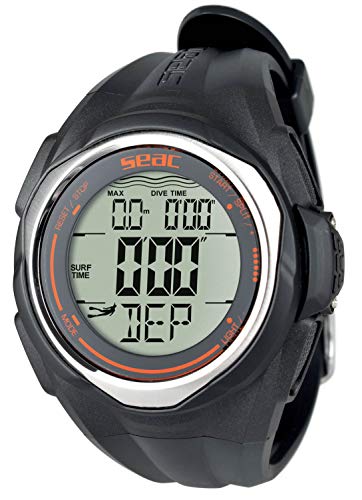
Yes, dedicated freediving computers like the SEAC Partner prioritize rapid depth updates and surface recovery intervals rather than decompression tables. Scuba computers focus on nitrogen tissue loading, no-decompression limits, and controlled ascent rates. Freediving instruments record rapid descent and surface recovery intervals in seconds rather than minutes. Some advanced multi-gas dive computers provide distinct modes for both diving styles within a single watch housing.


Write Your Review
No reviews yet. Be the first to share your experience!